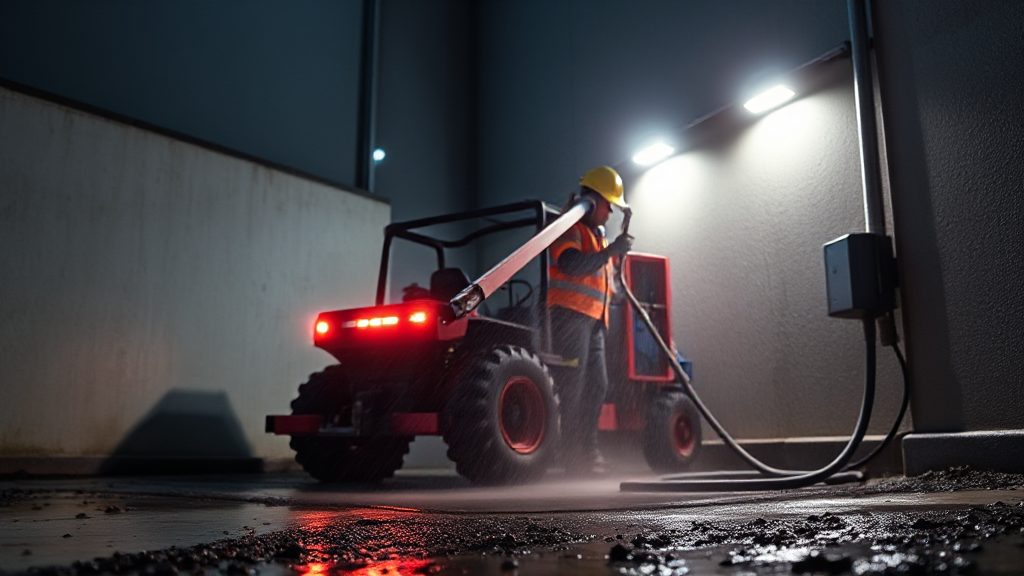
Why Drain Problems Look the Way They Do in Araucária PR
Araucária did not grow slowly. It grew in bursts, pulled forward by industry and the workers who followed the jobs. That pattern of growth left a mark on the ground — and on the pipes underneath it. The neighborhoods that appeared fastest are often the ones where drainage behaves in the most complicated ways today, and understanding that history is the first step before calling a desentupidora em Araucária PR.
This is not a city where a single type of drain problem repeats street after street. The issues shift depending on when a neighborhood was built, how the land was graded, and whether the plumbing was designed for a family home or for a factory floor. If you are new to the area or simply trying to understand why your sink keeps backing up while your neighbor’s does not, the answer usually sits somewhere in the city’s own timeline.
How Industrial Growth Shaped the City’s Underground
Araucária sits in a region where large industrial plants and logistics operations have long dominated the economic picture. When those facilities arrived, they brought roads, worker housing, and a demand for infrastructure that had to be built quickly. The result was a patchwork of systems: some areas got planned networks, others grew organically around existing streets.
That patchwork matters because drainage is only as good as its weakest segment. A well-built residential street can still flood if the line it connects to was sized for a much smaller population decades ago. Inherited infrastructure is the single biggest factor in how a neighborhood drains today.
The difference between planned and organic neighborhoods
Planned areas tend to have straighter lines, clearer access points, and inspection chambers that make maintenance easier. Organic areas — where houses were added as families arrived — often have lines that bend at odd angles, share connections informally, and lack the clean-outs a technician needs to work efficiently. When a blockage happens there, it is rarely a simple fix.
Why industrial zones affect nearby homes
Heavy vehicle traffic and large paved surfaces change how water moves across the ground. Rain that once soaked into soil now runs toward residential streets, adding volume to systems that were never designed for it. Over time, that extra load pushes debris further into pipes and accelerates wear on older joints.
The Housing Stock and What It Means for Plumbing
Araucária has a wide mix of housing: older homes from the mid-twentieth century, worker housing from the industrial expansion years, and newer condominiums built as the city’s population continued to grow. Each type carries its own plumbing signature, and each fails in its own way.
Older homes often have cast iron or galvanized pipes that have corroded from the inside. The pipe looks fine from the outside, but the inner diameter has narrowed to a fraction of what it once was. Corrosion does not just slow flow — it creates rough surfaces where grease and debris catch and build up. That is why a house that drained perfectly for thirty years can suddenly start backing up every few months.
Renovations that hide problems
Many older properties have been renovated, sometimes more than once. A new bathroom or kitchen may have been added without upgrading the line that serves it. When a homeowner calls a desentupidora Araucária, the technician often finds that the blockage is not in the fixture but in the undersized line behind the wall.
Condominiums and shared responsibility
Newer apartment buildings bring a different challenge: shared stacks and common areas where one blockage affects several units. In these buildings, the question of who is responsible for the repair can be as complicated as the repair itself. A clear maintenance record from the condominium administration makes diagnosis faster and prevents repeated problems in the same stack.
What This History Means for a Single Household
For a resident, the city’s growth story translates into a few practical realities. First, the age of your building tells you a lot about what to expect. Second, the neighborhood’s development pattern tells you how hard it will be to access and clear a blockage. Third, the type of property — house, apartment, or commercial unit — determines who needs to be involved when something goes wrong.
When a drain starts behaving badly, the temptation is to reach for a chemical product. In older Araucária homes, that is often the worst choice. Chemical drain cleaners can damage already-weakened pipes and rarely clear a blockage caused by roots or collapsed joints. A professional assessment is usually cheaper than the damage a failed DIY attempt can cause.
Signs that point to a structural cause
Some problems announce themselves clearly: water backing up in multiple fixtures, gurgling sounds from drains, or a persistent smell in the yard. Others are quieter, like a slow drain that has been getting slower for months. If you notice any of these, it is worth having the line inspected rather than waiting for a full blockage. A desentupidora Araucária PR can use a camera to see what is actually happening inside the pipe instead of guessing.
Preventive maintenance as a household habit
Simple habits make a measurable difference in a city where lines are already under pressure. Avoid pouring grease down the kitchen sink, use strainers in showers and sinks, and pay attention to what goes into toilets. For homes with mature trees nearby, an annual check of the main line is a reasonable precaution. These steps do not eliminate the need for professional service, but they reduce how often it is needed.
Choosing Help That Understands the Local Context
Not every drainage company works the same way, and in a city with Araucária’s mix of old and new infrastructure, local familiarity matters. A team that knows which neighborhoods have older cast iron lines, which streets flood after heavy rain, and which condominiums have recurring stack issues will diagnose faster and recommend solutions that fit the building rather than a generic template.
When comparing providers, ask about the methods they use. Hydro jetting, for example, is effective on grease and scale but requires the right pressure for the pipe’s condition. Camera inspection confirms what is actually blocking the line. A company that offers both, and explains when each is appropriate, is usually the better choice. The right method depends on the pipe, not on the tool the company prefers.
Questions worth asking before hiring
- Do you inspect the line before clearing it, or only after?
- How do you handle emergencies outside business hours?
- Can you explain the cause of the blockage, not just remove it?
- Do you provide a written record of the work for the property owner or condominium?
These questions are not about finding the cheapest option. They are about finding a team that treats the underlying cause as part of the job. In a city shaped by fast growth and layered infrastructure, that approach saves money over time and prevents the same problem from returning next season.
For a single household, the takeaway is simple: the pipes under your home are part of a larger story that began long before you moved in. Understanding that story — the age of the building, the pattern of the neighborhood, the condition of the line — turns a stressful backup into a problem that can be diagnosed and solved. That is the practical value of looking at Araucária’s drainage issues through the lens of its own history.